Air purifiers are one of the highest-priced categories on this site, and also one where marketing outruns the evidence the most. Manufacturers routinely imply their machines will meaningfully calm your allergies — sneezing, congestion, itchy eyes — the way a nasal spray or antihistamine might. The honest picture is narrower than that: a properly sized HEPA purifier will measurably pull pollen, dust, and pet dander out of a room's air, but clinical trials testing whether that translates into fewer symptoms are genuinely mixed. This guide ranks purifiers on what's actually measurable — CADR, room-size fit, and the filter cost you'll pay for years after the purchase — instead of on symptom-cure claims we can't back up.
This article is for general education and isn't a substitute for advice from your own physician or allergist.
Quick Answer
A true HEPA air purifier reliably strips airborne pollen, dander, and dust from a room's air, but controlled trials on whether that translates into fewer allergy or asthma symptoms are mixed. Pick by CADR matched to your room size and by filter replacement cost — not by symptom-cure marketing — and skip any model that generates ozone.
At a glance — our picks by room size and price (why we rank them this way, and the honest evidence, is below ↓):
| Purifier | Best for | Room size | ~Price |
|---|---|---|---|
| Levoit Core 300S | Small rooms — bedroom, office, nursery | ~200 sq ft | $100 |
| Winix 5510 | Best overall value — medium rooms | ~360 sq ft | $180 |
| Coway Mighty AP-1512HH | Balanced, quiet, long track record | ~360 sq ft | $230 |
| Levoit Core 600S | Whole-room / larger bedrooms | ~635 sq ft | $250 |
| Blueair Blue Pure 211i Max | Premium large open rooms, smart controls | ~635 sq ft | $350 |
What the Evidence Actually Shows (Read This Before You Buy)
Start with what's genuinely well established: a true HEPA filter captures at least 99.97% of airborne particles down to 0.3 microns, which covers pollen, pet dander, dust mite fecal matter, and mold spores riding in room air. Portable air cleaners with an adequately sized clean air delivery rate (CADR) demonstrably lower measured indoor particulate matter — randomized trials comparing active units against placebo (sham) devices have found substantially reduced concentrations of fine and coarse particulate in the room.
Where the picture gets murkier is the step from "less particulate in the air" to "fewer symptoms." A systematic review of randomized trials on air filtration and asthma found that while filtration devices consistently lowered particulate levels, that didn't reliably translate into improved lung function or asthma symptom scores across the pooled trials PMID: 12426250. A broader systematic review commissioned to inform asthma management guidelines reached a similarly cautious conclusion: indoor allergen reduction strategies, air filtration included, showed inconsistent and generally modest effects on asthma outcomes across the available trial evidence PMID: 29452202. A more recent single-center randomized, double-blind, placebo-controlled trial of a popular consumer HEPA purifier found no significant difference in asthma control scores between the active-purifier and placebo (sham) groups over 12 weeks PMID: 36288782. Not every trial comes back null — a 2025 randomized study using a controlled exposure chamber found that active air cleaners meaningfully reduced allergic response to airborne cat allergen compared with sham devices, suggesting a real effect under tightly controlled exposure PMID: 40246248 — but the inconsistency across real-world versus chamber studies is exactly why we're not going to promise you an air purifier will fix your allergies.
There's a plausible, unglamorous explanation for the gap: air purifiers only ever clean air that's already airborne and passing through the unit. They do nothing for allergens embedded in carpet fibers, upholstery, and bedding, which is a large share of total indoor allergen exposure — one review specifically focused on house dust mite allergen found that dust mite avoidance measures, including air filtration, produced no clinically important benefit for perennial allergic rhinitis on their own PMID: 20614426. If your dust mite exposure is mostly coming from your mattress and pillows rather than room air, a purifier alone won't move the needle — see our guide to dust mite allergy management and our dust mite mattress and pillow cover rankings for the piece an air purifier can't cover.
What this means for how we rank below: we're not scoring these purifiers on promised symptom relief, because the trial evidence doesn't support that promise consistently enough to make it. We're ranking on CADR relative to room size, build quality, noise at the settings you'd actually run overnight, and the ongoing filter cost — the factors that determine whether a purifier does its one well-proven job (removing airborne particles) efficiently in your specific space.
One Thing to Rule Out First: Skip Ionizers and Ozone Generators
Before comparing HEPA models, it's worth being direct about a category to avoid entirely: ionic air purifiers and "ozone generators" marketed for allergy or odor control. These devices work by a different mechanism than HEPA filtration — some intentionally produce ozone as their active ingredient, others generate it as an unwanted byproduct of ionization. Independent measurements of ionization- and ozonolysis-based air purifiers have found they can raise indoor ozone concentrations to levels well above outdoor air quality standards in normal home use PMID: 16739796. Ozone is a lung irritant, not an allergen remover — it doesn't trap pollen or dander the way a physical HEPA filter does, and breathing elevated ozone can itself provoke coughing, chest tightness, and airway irritation, which is the opposite of what someone with allergies or asthma wants from an air purifier. Every product ranked below is a true HEPA mechanical filter with no ionizing or ozone-generating function.
How to Pick the Right Size: CADR and Room Match
The single most common reason people feel their air purifier "isn't working" is that it's undersized for the room. Two numbers matter:
- CADR (Clean Air Delivery Rate), measured separately for smoke, dust, and pollen, tells you the volume of filtered air the unit delivers per minute. Manufacturers publish this via independent AHAM Verifide testing — look for the actual certified number, not just a "covers up to X sq ft" marketing claim.
- Room square footage, matched so the unit's CADR is at least two-thirds of the room's floor area for a reasonable number of air changes per hour. A purifier rated for a 150-square-foot bedroom will underperform badly in a 400-square-foot open living room, no matter how good its filter is.
Run the numbers before you buy: an underpowered purifier in a large room does measurably less than an appropriately sized one, even if both use identical filter media.
Our Rankings
These rankings weigh CADR relative to advertised room size, filter replacement cost and interval, noise at a livable overnight setting, and build quality — not promised symptom relief.
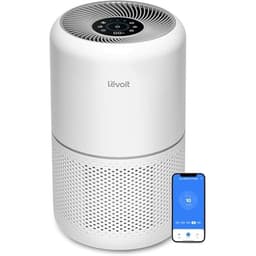
Levoit Core 300S
Best For
Small rooms — bedrooms, nurseries, home offices up to ~200 sq ft
Works In
Continuous use; noticeable particulate drop within hours in a correctly sized room
Price
$149.99
$149.99 / count
Pros
- ✓True HEPA filter rated to capture 99.97% of particles down to 0.3 microns
- ✓Quiet enough at low-medium settings to run overnight in a bedroom
- ✓App and auto-mode add convenience without inflating the price much
Cons
- ✗CADR is only sufficient for genuinely small rooms — don't oversize its coverage claim
- ✗Proprietary filter cartridge locks you into Levoit's replacement pricing
- ✗No activated carbon layer for odor/VOC control beyond basic models
We earn 1-4%/sale if you sign up · See all commissions
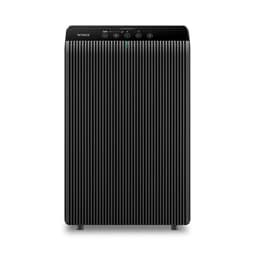
Winix 5510 (successor to the 5500-2)
Best For
Best overall value — medium rooms with a strong pollen/dust CADR for the price
Works In
Continuous use in rooms up to ~360 sq ft
Price
$179.99
$179.99 / count
Pros
- ✓True HEPA plus washable AOC carbon filter for odor at a genuinely competitive price
- ✓Independent testing has shown it removing a very high share of airborne allergens in medium rooms
- ✓PlasmaWave feature can be switched off entirely if you'd rather run pure HEPA filtration
Cons
- ✗PlasmaWave is an ionizing feature — leave it off if you want to avoid any ozone byproduct
- ✗Bulkier footprint than the Levoit Core models
- ✗Replacement filter cost adds up faster than the unit price suggests
We earn 1-4%/sale if you sign up · See all commissions
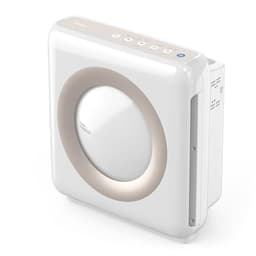
Coway Mighty AP-1512HH
Best For
Balanced pick — strong pollen CADR, quiet operation, long track record
Works In
Continuous use in rooms up to ~360 sq ft
Price
$229.99
~$230 of use
Pros
- ✓One of the most consistently well-reviewed CADR-to-price ratios in the mid-size category
- ✓Eco mode with auto shutoff and a light-sensing display for nighttime use
- ✓Long production history means filters and support are easy to find
Cons
- ✗Higher upfront price than the Levoit or Winix options
- ✗Filter replacement isn't the cheapest in this lineup
- ✗No smart/app control, which some buyers may want at this price point
We earn 1-4%/sale if you sign up · See all commissions
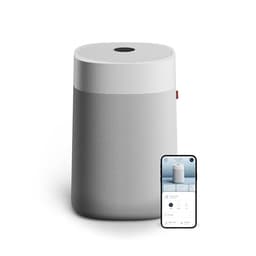
Blueair Blue Pure 211i Max
Best For
Premium large-room pick — open living areas and great rooms, with smart controls
Works In
Continuous use in large open floor plans up to ~635 sq ft
Price
$349.00
~$350 of use
Pros
- ✓Genuinely high CADR that holds up in large, open rooms rather than just on paper
- ✓Smart/WiFi with auto mode and a built-in particle sensor that ramps the fan to real-time air quality
- ✓Washable fabric pre-filter and a minimal, quiet cylindrical design that fits open living spaces
Cons
- ✗Premium price — this is the priciest unit here and is overkill for a small bedroom
- ✗Combined filter cartridge means you're replacing the whole thing, not just a worn layer
- ✗Highest fan speed is noticeably louder than the mid-size options above
We earn 1-4%/sale if you sign up · See all commissions
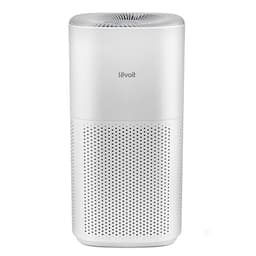
Levoit Core 600S
Best For
Whole-room coverage for larger bedrooms or open-concept spaces up to ~635 sq ft
Works In
Continuous use; strongest CADR in the Levoit lineup
Price
$259.99
~$250 of use
Pros
- ✓Highest CADR of the Levoit models, appropriate for genuinely large rooms
- ✓Quiet-mode performance is respectable given the higher maximum airflow
- ✓App-based air quality monitoring helps confirm the unit is keeping up with the room
Cons
- ✗Same proprietary-filter lock-in as the Core 300S, at a higher replacement price
- ✗Large footprint relative to the mid-size competitors above
- ✗Only worth the premium if your room genuinely needs that much CADR
We earn 1-4%/sale if you sign up · See all commissions
Amazon prices retrieved from the Amazon Product Advertising API on . Prices and availability are accurate as of that time and may change.
The Cost You'll Pay After the Purchase: Filter Replacement
The sticker price is only part of what an air purifier costs over time. True HEPA filters can't be washed and restored the way a pre-filter can — once they're loaded with trapped particulate, they need to be replaced, typically every 6-12 months depending on how many hours a day the unit runs and how polluted your local air is. Heavy daily use in a home with pets or during pollen season can push that closer to the 6-8 month mark; light, occasional use in a relatively clean environment can stretch closer to 12-18 months.
Budget $40-$100 per year per unit for genuine replacement HEPA filters, and check that price before you buy the purifier itself — some brands' unit cost is low but the ongoing filter cost quietly makes it the more expensive option within a couple of years. Third-party and OEM replacement HEPA filters are worth comparing directly against a manufacturer's own cartridge; independent testing has generally found quality generic filters perform comparably to OEM parts at a meaningful discount, though fit varies by model, so confirm compatibility before ordering.
We earn 1-4%/sale if you sign up · See all commissions
Who an Air Purifier Is (and Isn't) a Good Fit For
An air purifier is a reasonable, evidence-supported addition if you: have measurable airborne triggers (pollen tracking in from outside, cat or dog dander, wildfire or wood-smoke season) and want to lower the particulate load in a specific room you spend a lot of time in; already have dust-mite bedding covers and a regular cleaning routine in place and want to address the air on top of surfaces; or simply want objectively cleaner room air, independent of whether it changes your symptom score.
It's a weaker standalone fix if you're expecting it to meaningfully replace medication — if nasal congestion, sneezing, or itchy eyes are your dominant day-to-day symptoms, an intranasal steroid or antihistamine spray usually does more of the work than filtration alone; our nasal spray comparison covers the options with the strongest evidence for that specifically. It's also a weaker fit if your main exposure is dust mites embedded in your mattress, carpet, and upholstery rather than airborne particles — a purifier can't reach allergens that never become airborne in the first place. If your allergies are pet-driven, pairing a properly sized purifier with actual source control (keeping pets out of the bedroom, regular grooming, HEPA vacuuming) matters more than the purifier alone; our pet allergy guide covers that full strategy. If mold and general indoor air quality — not just pollen or dander — are your main concern, our mold allergy and indoor air guide goes deeper on humidity control and ventilation, which matter as much as filtration for mold-driven symptoms.
Frequently Asked Questions
Do air purifiers actually help with allergies? They reliably reduce airborne particle and allergen concentrations when sized correctly for the room. Whether that measurably improves nasal or asthma symptoms is less consistent across clinical trials — some show a modest benefit, others show none, likely because purifiers can't reach allergens already settled on surfaces.
What's the best air purifier for pollen? Any true HEPA purifier with a CADR rated for your room size will capture pollen effectively, since pollen grains are relatively large particles. The Winix 5510 and Coway Mighty AP-1512HH both post strong pollen CADR for medium rooms at a moderate price.
What's the best air purifier for allergies and asthma in a small room? The Levoit Core 300S is sized for rooms up to roughly 200 square feet — a good match for a bedroom, nursery, or home office without paying for CADR you don't need.
How much do air purifier filter replacements cost? Budget $40-$100 per year per unit for genuine HEPA replacement filters, changed roughly every 6-12 months depending on use and local air quality.
Are ionizer or ozone-generating air purifiers safe for allergies? No — avoid them. They can raise indoor ozone to levels that irritate the lungs, and there's no good evidence they clear allergens any better than a true HEPA filter.
How do I know what size air purifier I need? Check the manufacturer's certified CADR rating against your room's square footage — CADR should be at least two-thirds of the room's floor area. An undersized purifier is the most common reason people feel it isn't working.
References
- McDonald E, Cook D, Newman T, Griffith L, Cox G, Guyatt G. Effect of air filtration systems on asthma: a systematic review of randomized trials. Chest. 2002;122(5):1535-1542. PMID: 12426250.
- Leas BF, D'Anci KE, Apter AJ, et al. Effectiveness of indoor allergen reduction in asthma management: A systematic review. Journal of Allergy and Clinical Immunology. 2018;141(5):1854-1869. PMID: 29452202.
- Fong WCG, Kadalayil L, Lowther S, et al. The efficacy of the Dyson air purifier on asthma control: A single-center, investigator-led, randomized, double-blind, placebo-controlled trial. Annals of Allergy, Asthma & Immunology. 2023;130(2):199-205. PMID: 36288782.
- Gherasim A, Dietsch F, Odul F, et al. Efficacy of air cleaners to reduce allergic responses to cat: A randomized clinical trial using an environmental exposure chamber. Respiratory Medicine. 2025;242:108105. PMID: 40246248.
- Sheikh A, Hurwitz B, Nurmatov U, van Schayck CP. House dust mite avoidance measures for perennial allergic rhinitis. Cochrane Database of Systematic Reviews. 2010;(7):CD001563. PMID: 20614426.
- Britigan N, Alshawa A, Nizkorodov SA. Quantification of ozone levels in indoor environments generated by ionization and ozonolysis air purifiers. Journal of the Air & Waste Management Association. 2006;56(5):601-610. PMID: 16739796.