If your nose runs the moment you get into bed, or you wake up congested every single morning regardless of the season, the culprit probably isn't pollen — it's the several hundred thousand to several million dust mites living in your mattress, pillows, and carpet. Unlike seasonal allergies, dust mite allergy doesn't ease up in any particular month, because mites don't care about pollen counts; they care about your skin flakes, warmth, and humidity, all of which your bed provides in abundance year-round. This guide covers what's actually causing the symptoms, which cleaning and encasement steps have real evidence behind them (and which are overhyped), and where medication fits in.
This article is for general education and isn't a substitute for a diagnosis or treatment plan from your own physician or allergist.
Quick Answer
Dust mite allergy symptoms — nighttime sneezing, congestion, itchy eyes — come from mite droppings in mattresses and bedding, not the mites themselves. Wash bedding weekly at 130°F or hotter, use allergen encasements as one part of a broader routine rather than a standalone fix, and pair with a daily antihistamine for consistent relief.
What a Dust Mite Allergy Actually Is
Dust mites (Dermatophagoides pteronyssinus and Dermatophagoides farinae are the two common species) are microscopic relatives of spiders that live in soft household surfaces — mattresses, pillows, upholstered furniture, carpet — and feed mainly on shed human skin cells. You're not allergic to the mites themselves; you're allergic to proteins in their fecal pellets and body fragments, chiefly a protein called Der p 1 (or Der f 1), which becomes airborne when bedding is disturbed and is easily inhaled. A single mite produces waste pellets continuously throughout its roughly 2-3 month lifespan, and a mattress that's a few years old can house an enormous cumulative allergen load even if it looks perfectly clean.
Mites thrive in warm, humid conditions — ideally around 68-77°F (20-25°C) with relative humidity above 50%. That's part of why symptoms often feel worse in humid climates or seasons, and why humidity control is one of the few environmental levers with a real mechanistic basis, not just a marketing claim.
Dust Mite Allergy Symptoms at Night
Dust mite allergy has a distinctive timing pattern that's one of the more useful diagnostic clues you can notice yourself: symptoms cluster around time spent in bed, rather than time spent outdoors. Typical nighttime and morning symptoms include:
- Sneezing that starts soon after getting into bed, or a run of sneezes upon waking
- Nasal congestion or a runny nose that's noticeably worse at night than during the day
- Itchy, watery eyes, especially first thing in the morning
- A dry, tickly cough that improves once you're up and away from the bedroom
- Postnasal drip that disrupts sleep or causes a sore throat on waking
- Facial pressure or a "stuffed up" feeling that's worst overnight and eases through the day
For people with asthma, dust mite exposure overnight can also trigger nighttime coughing, wheezing, or chest tightness — a pattern worth flagging to your doctor specifically, since it points toward the bedroom (not general indoor air) as the exposure source. The reason for the nighttime pattern is straightforward: you spend 6-9 hours with your face inches from the mattress and pillow, the two surfaces with the highest concentrated mite allergen in the home, and normal movement during sleep stirs allergen into the air you're breathing all night.
Signs of Dust Mites in Your Bed
You'll never see a dust mite with the naked eye — they're roughly a quarter of a millimeter long — so "signs of dust mites" in practice means either symptom patterns or a few visible clues:
- Fine, dark specks on light bedding. Mite fecal pellets can accumulate as tiny dark specks on white or light-colored sheets, pillowcases, or the surface of a mattress protector, especially visible after a stretch without washing.
- A musty or dusty smell from a pillow or mattress, particularly one that's more than a few years old and hasn't been laundered or protected.
- Symptom correlation with the bedroom specifically — congestion or sneezing that improves noticeably on vacation or after a night spent somewhere else, and returns once you're back in your own bed.
- Skin flare-ups tied to bedding contact, including eczema patches that worsen overnight or itching concentrated where skin touches sheets and pillowcases.
- An older mattress or pillow that's never been encased. Mattress allergen load tends to build over years of ordinary use; a mattress that's 5+ years old without a protective cover is a reasonable candidate even without other visible signs.
If you're not sure whether dust mites, pet dander, or something else is behind year-round symptoms, allergy testing (skin prick or blood IgE) is the only way to confirm dust mite sensitization specifically rather than guessing from symptom pattern alone.
How to Get Rid of Dust Mites in Your Mattress
You cannot sterilize a mattress you sleep on every night — mites and their allergen will always be present to some degree in an occupied home. The realistic goal is reducing the allergen load enough that it stops triggering symptoms, and that takes a combination of steps rather than any single fix. A joint practice parameter from U.S. allergy specialty societies is explicit on this point: a multifaceted, sustained approach to dust mite exposure control works better than any one measure used alone PMID: 24267359.
Washing Bedding: The Temperature That Actually Kills Dust Mites
Water temperature is the detail most people get wrong. A frequently cited laundering study found that hot water — at least 130°F (54.4°C) — was needed to reliably kill dust mites and wash their allergen out of bedding, while a warm wash around 104°F (40°C) left the large majority of mites alive PMID: 1401643. Most home washing machines default to a "warm" cycle well below that threshold unless you deliberately select hot water.
Practical laundering routine:
- Wash sheets, pillowcases, and any washable mattress or pillow covers weekly in water at 130°F or hotter.
- For delicate items that can't take hot water, run them through a hot dryer cycle (above 130°F) for at least 15-20 minutes, which kills mites via heat even without the wash.
- Comforters, mattress pads, and other bulky bedding that's washed less often should still get an occasional hot-water or hot-dryer cycle, since allergen accumulates between washes.
- Freezing small washable items (like stuffed animals) for 24+ hours is a reasonable substitute when hot laundering isn't an option, though it doesn't remove the allergen itself the way washing does — it just kills the mites.
Vacuuming and Humidity
A HEPA-filter vacuum on the mattress surface, box spring, and surrounding carpet helps physically remove settled allergen and mite debris — a standard vacuum without HEPA filtration can actually redistribute fine allergen particles into the air rather than capturing them. Keeping indoor relative humidity below 50% (a hygrometer makes this easy to track) starves mites of the moisture they need to thrive, and is one of the more evidence-grounded environmental levers available, per the same practice parameter guidance on exposure control PMID: 24267359.
Do Dust Mite Encasements Actually Work? (An Honest Answer)
This is the question where the marketing on mattress-cover packaging tends to outrun the science, and it deserves a direct, non-oversold answer.
What's well established: allergen-impermeable encasements — tightly woven covers with a pore size small enough to block Der p 1 — measurably reduce dust mite allergen levels in mattress dust. That part isn't in dispute.
What's genuinely mixed: whether encasements alone translate into fewer symptoms or better asthma control. A large, well-designed randomized controlled trial fitted more than 1,100 adults with asthma with allergen-impermeable mattress, pillow, and quilt covers versus ordinary control covers, and found that despite significantly lower mattress allergen levels in the intervention group at six months, there was no measurable difference in asthma symptoms, peak flow, or medication use between groups PMID: 12867606. A Cochrane systematic review pooling multiple trials of dust mite control measures — encasements chief among them — reached a similarly unenthusiastic conclusion: as a category, these measures could not be recommended as effective symptom-relief interventions when evaluated in isolation PMID: 18425868.
That doesn't mean encasements are useless — it means they're one input into a larger system, not a self-contained fix. The practical takeaway matches the guideline language above: encasements are a reasonable, low-risk piece of a broader routine (laundering, vacuuming, humidity control, and for many people, medication), not a purchase that on its own should be expected to resolve symptoms. If a mattress or pillow cover is the only change you make, don't be surprised if symptoms persist.
Medication That Helps
Environmental control reduces exposure; medication treats the immune reaction that's still happening despite your best cleaning routine. For most people with a dust mite allergy, that reaction is present essentially year-round (this is what "perennial allergic rhinitis" means, as opposed to the seasonal pattern from pollen), which shapes which medications make sense to use consistently rather than only during flare-ups.
Second-generation antihistamines like levocetirizine are a reasonable daily option — a placebo-controlled randomized trial in children with perennial allergic rhinitis found meaningful symptom improvement and quality-of-life benefit with levocetirizine over a 4-week course PMID: 16136768. That trial was conducted in a pediatric population, so its results don't directly establish the same effect size in adults, though levocetirizine's mechanism and the broader second-generation antihistamine evidence base support its use across age groups. Because it's taken once daily and has a relatively low drowsiness profile compared with first-generation antihistamines, many people take it at bedtime, which conveniently lines up with when dust mite symptoms tend to be worst.
Intranasal corticosteroids (like fluticasone) are generally considered first-line for ongoing nasal symptoms from perennial allergens, since they address the underlying nasal inflammation more directly than an antihistamine and tend to outperform oral antihistamines for congestion specifically. They're worth discussing with a pharmacist or physician if nasal symptoms are your dominant complaint rather than eye or skin symptoms.
For persistent symptoms despite avoidance and medication, sublingual immunotherapy (allergy drops placed under the tongue) targeting house dust mite extract has meta-analysis-level evidence supporting meaningful symptom reduction in dust-mite-induced allergic rhinitis PMID: 28293928. Unlike antihistamines or avoidance measures, immunotherapy aims at the underlying sensitization rather than just suppressing symptoms, though it's a multi-year commitment rather than a quick fix. Our complete guide to sublingual immunotherapy covers how it works, what the trial evidence shows, and how it compares with traditional allergy shots.
Our Rankings
These are the products we'd reach for first when building out a dust-mite-reduction routine — not because any single one "cures" the allergy, but because each addresses a specific, evidence-grounded piece of the exposure-reduction puzzle described above.
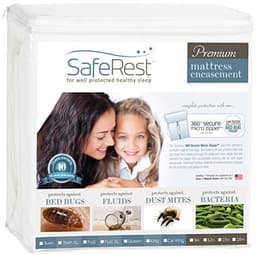
Mattress Encasement (Allergen-Proof, Six-Sided)
Best For
Sealing the single largest reservoir of mite allergen in the bedroom
Works In
Ongoing use; part of a bundled routine, not a standalone fix
Price
$49.99
~$40-70 one-time of use
Pros
- ✓Reliably reduces measurable mattress allergen levels when the weave is tight enough to block Der p 1
- ✓One-time purchase that keeps working as long as it's on the bed
- ✓Zero daily effort once installed, unlike laundering or vacuuming routines
Cons
- ✗Randomized trial evidence shows encasements alone don't reliably improve symptoms without other measures added
- ✗Needs to be six-sided (including the bottom) to be fully effective — some cheaper covers only protect the top
- ✗Still requires occasional washing itself to stay effective long-term
We earn 1-4%/sale if you sign up · See all commissions
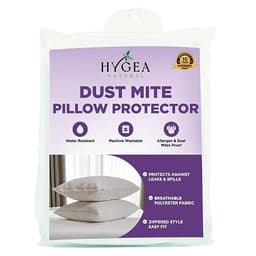
Dust Mite Pillow Covers
Best For
Protecting the surface closest to your face for 6-9 hours a night
Works In
Ongoing use; pairs with a mattress encasement
Price
$13.99
$7.00 / count
Pros
- ✓Covers a high-exposure surface that's easy to overlook if you only encase the mattress
- ✓Inexpensive relative to a full mattress encasement
- ✓Machine washable alongside your regular bedding rotation
Cons
- ✗Same caveat as mattress encasements — best used as part of a broader routine, not alone
- ✗Needs periodic replacement as the fabric wears
- ✗Some users find the crinkly texture of certain fabrics uncomfortable under a pillowcase
We earn 1-4%/sale if you sign up · See all commissions
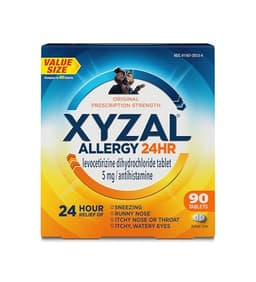
Xyzal (Levocetirizine)
Best For
Daily symptom control for year-round (perennial) allergic rhinitis
Works In
Within hours; taken nightly for consistent control
Price
$30.48
$0.34 / count
Pros
- ✓Randomized trial evidence for perennial allergic rhinitis, the pattern typical of dust mite allergy, though the pivotal trial was conducted in children
- ✓Once-daily dosing, commonly taken at night ahead of the worst symptom window
- ✓Lower drowsiness profile than first-generation antihistamines for most users
Cons
- ✗Treats the immune reaction, not the exposure — works best paired with the environmental steps above
- ✗Some users still report next-day drowsiness even though it's less sedating than older antihistamines
- ✗Doesn't address nasal congestion as effectively as an intranasal steroid for some people
We earn 1-4%/sale if you sign up · See all commissions
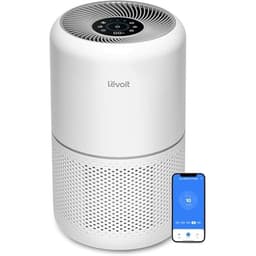
Levoit Core 300S Air Purifier
Best For
Reducing airborne allergen in the bedroom between cleanings
Works In
Continuous use; most effective for small-to-medium bedrooms
Price
$149.99
$149.99 / count
Pros
- ✓True HEPA filtration captures fine airborne particles that settle back onto surfaces between cleanings
- ✓Quiet enough for overnight bedroom use, unlike many larger units
- ✓App and auto mode make it easy to run continuously without much thought
Cons
- ✗Air purifiers address airborne allergen, not the reservoir sitting in your mattress — this is a supplement to encasements and laundering, not a replacement
- ✗Room-size limits mean it's not a fit for large or open-plan bedrooms
- ✗Filter replacement is an ongoing cost worth factoring into the price
We earn 1-4%/sale if you sign up · See all commissions
Amazon prices retrieved from the Amazon Product Advertising API on . Prices and availability are accurate as of that time and may change.
For a deeper dive into encasement options specifically — pore size, zipper quality, and which brands hold up over repeated washing — see our full ranking of the best dust mite covers. And if airborne allergen (not just what's in your mattress) is a bigger concern, our guide to the best air purifiers for allergies goes deeper on CADR ratings and room-size matching.
Building a Realistic Dust-Mite-Reduction Routine
Given that no single measure reliably fixes symptoms on its own, here's a routine that bundles the steps with the best combined rationale:
- Encase the mattress and pillows in six-sided, allergen-proof covers — a one-time setup step.
- Wash all bedding weekly in water at 130°F or hotter (or a hot dryer cycle if hot washing isn't possible).
- Vacuum the mattress and surrounding carpet weekly with a HEPA-filter vacuum.
- Keep bedroom humidity below 50% using a hygrometer and a dehumidifier if needed.
- Run a HEPA air purifier in the bedroom, particularly overnight.
- Add a daily antihistamine or intranasal steroid if environmental steps alone aren't enough — most people with a confirmed dust mite allergy end up needing both.
- Consider sublingual immunotherapy if symptoms remain disruptive despite steps 1-6 for several months.
Give a new routine at least 4-6 weeks before judging whether it's helping — allergen levels built up over years don't drop to zero overnight, even with every step in place.
Frequently Asked Questions
What are dust mite allergy symptoms at night? Sneezing, nasal congestion, itchy eyes, and coughing that start or worsen after getting into bed, since your face spends hours close to the mattress and pillow where allergen concentrates most.
What are the signs of dust mites in your bed? Mostly symptomatic — morning congestion, itchy eyes, a cough that eases once you're up — plus occasional visible clues like fine dark specks (mite droppings) on light bedding or a musty smell from an older, uncovered mattress.
How do I get rid of dust mites in my mattress? You can't eliminate them completely from a mattress in daily use, but encasing it in an allergen-proof cover, washing bedding weekly at 130°F or hotter, vacuuming with a HEPA vacuum, and keeping humidity under 50% together meaningfully reduce the allergen load.
What temperature kills dust mites when washing bedding? At least 130°F (54.4°C); a warm wash around 104°F leaves most mites alive PMID: 1401643. A hot dryer cycle above 130°F for 15-20 minutes works as a substitute when hot washing isn't an option.
Do dust mite covers actually work? They reliably cut measurable allergen levels, but randomized trial evidence shows encasements alone often don't produce a clear symptom improvement PMID: 12867606 PMID: 18425868 — they work best as one part of a bundled routine, not a stand-alone fix.
What medication helps with a dust mite allergy? A daily second-generation antihistamine like levocetirizine has randomized trial evidence for perennial allergic rhinitis in children PMID: 16136768, and its use in adults is supported by the broader antihistamine class evidence rather than that specific pediatric trial. Intranasal steroids are generally first-line for nasal symptoms, and sublingual immunotherapy is an option with meta-analysis-level evidence for people who need more than avoidance and medication alone PMID: 28293928.
References
- McDonald LG, Tovey E. The role of water temperature and laundry procedures in reducing house dust mite populations and allergen content of bedding. Journal of Allergy and Clinical Immunology. 1992;90(4 Pt 1):599-608. PMID: 1401643.
- Portnoy J, Miller JD, Williams PB, et al. Environmental assessment and exposure control of dust mites: a practice parameter. Annals of Allergy, Asthma & Immunology. 2013;111(6):465-507. PMID: 24267359.
- Woodcock A, Forster L, Matthews E, et al. Control of exposure to mite allergen and allergen-impermeable bed covers for adults with asthma. New England Journal of Medicine. 2003;349(3):225-236. PMID: 12867606.
- Gøtzsche PC, Johansen HK. House dust mite control measures for asthma. Cochrane Database of Systematic Reviews. 2008;(2):CD001187. PMID: 18425868.
- Potter PC; Paediatric Levocetirizine Study Group. Efficacy and safety of levocetirizine on symptoms and health-related quality of life of children with perennial allergic rhinitis: a double-blind, placebo-controlled randomized clinical trial. Annals of Allergy, Asthma & Immunology. 2005;95(2):175-180. PMID: 16136768.
- Feng B, Xiang H, Jin H, Gao J, Huang S, Shi Y, Chen R, Chen B. Efficacy of sublingual immunotherapy for house dust mite-induced allergic rhinitis: a meta-analysis of randomized controlled trials. Allergy, Asthma & Immunology Research. 2017;9(3):220-228. PMID: 28293928.