What they are
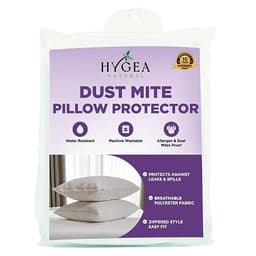
Dust mite pillow covers are zippered cases that wrap the whole pillow. They go under your normal pillowcase. Mites and their droppings, the actual allergen, stay sealed inside the pillow instead of reaching your face.
The item we link to is a Hygea zippered dust mite and allergen pillow protector set, standard size, 2 covers. They contain no drugs. Check the listing for fabric type and any pore-size or allergen-testing claims.
How well they work
There are two separate questions: do the covers block allergen, and does that make you feel better?
Blocking allergen: fabric matters. Lab testing found that tightly woven fabrics with an average pore size under 10 microns blocked dust mite allergen below detectable levels PMID: 9949312. The U.S. allergy practice parameter adds that nonwoven encasings aren't recommended, because allergen can build up on their surface over time PMID: 24267359. A woven fabric with a stated pore size is the safer bet.
Why pillows at all? Dust mite particles become airborne when bedding is disturbed, including when you move on a pillow, and mostly settle again within 20 to 30 minutes PMID: 24267359. Your pillow is where that happens closest to your nose, for hours every night.
Relieving symptoms: covers alone fall short.
- In a randomized trial of 1,122 adults with asthma, allergen-proof mattress, pillow and quilt covers lowered mite allergen in the mattress. But lung function and steroid use didn't improve compared with ordinary covers PMID: 12867606.
- A Cochrane review of mite control for allergic rhinitis concluded that impermeable bedding used alone is unlikely to help PMID: 20614426.
The practice parameter still recommends mattress, box spring and pillow encasings, but as one part of a multi-step plan. It states that covers alone are unlikely to help unless combined with other measures PMID: 24267359.
Downsides and practical tips
- They don't work without a mattress encasement. Seal the mattress first.
- Pillowcases still collect allergen. Encasings don't protect the bedding on top of them PMID: 24267359. Wash pillowcases and sheets weekly.
- Washing temperature: water at 55°C (about 130°F) or hotter kills all mites. Even a cold wash removed most mite allergen from bedding in one study PMID: 1401643. Regular washing matters most. Follow the care label for the covers themselves.
- Zip them fully closed. A partly open zipper defeats the seal.
- Replace them when they wear. A broken zipper or thin fabric is no longer a barrier.
Pillow covers vs. mattress encasement
A mattress encasement seals the biggest mite reservoir in the bedroom. It costs more but does more. Pillow covers are cheaper and sit closest to your nose. They're a finishing step, not a starting point. Guidelines recommend both together PMID: 24267359.
Who should buy them
Buy them if testing has confirmed a dust mite allergy, you've already encased the mattress, and your symptoms are worse at night or on waking.
Skip them if you haven't encased the mattress yet (start there), or if your allergy isn't to dust mites.
Round out the plan with weekly hot washing, humidity kept at 35% to 50% PMID: 24267359, and a daily antihistamine like Xyzal if symptoms persist. See our Best Dust Mite Covers guide for more.