Zyrtec, Claritin, and Allegra are the three names that dominate the allergy aisle, and they're genuinely different drugs, not marketing variations on the same molecule — cetirizine, loratadine, and fexofenadine, respectively. All three are second-generation antihistamines that outperform placebo for allergic rhinitis, but they diverge in three ways that actually matter when you're standing in front of the shelf: how fast each one kicks in, how much it makes you drowsy, and what it costs once you look past the brand-name box. This comparison puts the three head-to-head on the trial evidence, not the packaging.
This article is for general education and isn't a substitute for advice from your own physician, pharmacist, or allergist.
Quick Answer
Cetirizine (Zyrtec) edges out loratadine (Claritin) and fexofenadine (Allegra) for symptom relief in head-to-head trials, but it also causes more drowsiness. Fexofenadine is the least sedating option, loratadine is a close second, and generic versions of all three contain the same active ingredient as the brand at a fraction of the cost.
Zyrtec vs Claritin vs Allegra at a Glance
| Zyrtec (cetirizine) | Claritin (loratadine) | Allegra (fexofenadine) | |
|---|---|---|---|
| Active ingredient | Cetirizine, 10mg | Loratadine, 10mg | Fexofenadine, 180mg (or 60mg twice daily) |
| Onset of action | About 1 hour PMID: 8621847 | 1-3 hours PMID: 8621847 | 1-3 hours, similar magnitude to cetirizine PMID: 14582814 |
| Duration | 24 hours, once daily | 24 hours, once daily | 24 hours (180mg) or 12 hours (60mg twice daily) |
| Drowsiness | Higher than the other two, though still far below a first-generation antihistamine PMID: 10784544 | Lowest of the three in surveillance data PMID: 10784544 | Low — equivalent relief to cetirizine with significantly less drowsiness in a direct trial PMID: 14582814 |
| Generic available | Yes — cetirizine | Yes — loratadine | Yes — fexofenadine |
| Typical cost per dose | ~$0.50-0.65 brand · ~$0.15-0.25 generic | ~$0.50-0.65 brand · ~$0.10-0.20 generic | ~$0.50-0.65 brand · ~$0.15-0.25 generic |
Zyrtec vs Claritin: Which Is Stronger?
This is the single most-searched question in the category, and the trial evidence gives a real, if modest, answer: cetirizine. A controlled outdoor study directly comparing cetirizine, loratadine, and placebo in seasonal allergic rhinitis found cetirizine relieved symptoms faster — improvement within about 1 hour versus roughly 3 hours for loratadine — and produced a larger reduction in total symptom scores over the following weeks PMID: 8621847. That's a genuine head-to-head result, not a marketing claim.
More recent pooled evidence points the same direction without changing the picture dramatically. A 2026 network meta-analysis conducted for the ARIA (Allergic Rhinitis and its Impact on Asthma) guideline panel, pooling randomized trials across oral antihistamines, found cetirizine among the stronger performers for total symptom relief PMID: 41707943. A separate systematic review and network meta-analysis of 18 trials in over 9,400 patients also found meaningful differences in relative efficacy between the major oral antihistamines — though that analysis ranked rupatadine highest overall and singled out loratadine as the lowest-ranked agent, rather than flagging cetirizine specifically as a top performer PMID: 37271114. Worth being honest about scale: cetirizine's edge from the trial and network meta-analysis above is real but modest, not evidence that loratadine is weak — and not every subsequent ranking of the class puts cetirizine at the top. All three clearly beat placebo; the differences between them are smaller than the difference between any of them and doing nothing.
Fexofenadine complicates a simple "cetirizine wins" story. A randomized, multicenter trial comparing fexofenadine 180mg directly against cetirizine 10mg in patients with moderate-to-severe seasonal allergic rhinitis found the two produced statistically equivalent symptom relief PMID: 14582814 — so on raw efficacy, Allegra isn't clearly behind Zyrtec; the two drugs mostly separate on sedation, covered next.
Which Allergy Medicine Makes You Least Drowsy?
"Non-drowsy" is printed on nearly every box in this category, but the actual sedation data isn't uniform. The same fexofenadine-vs-cetirizine trial referenced above found that while symptom relief was equivalent, fexofenadine caused significantly less drowsiness than cetirizine PMID: 14582814 — about as close to a controlled, apples-to-apples answer on sedation as this category offers.
Real-world surveillance data tells a consistent story. A set of four prescription-event monitoring studies in general practice, published in the BMJ, found the reporting rate for sedation with cetirizine was roughly 3.5 times higher than with loratadine, while fexofenadine showed no significant difference in sedation reports compared with loratadine PMID: 10784544. In practical terms: fexofenadine and loratadine cluster together as the lower-sedation choices, while cetirizine sits in a somewhat-more-sedating tier — still far better than a first-generation antihistamine like diphenhydramine, but a real tradeoff against its efficacy edge. If daytime alertness matters more (driving, focused work), Allegra or Claritin are the safer starting points; if nighttime control matters more and some morning grogginess is acceptable, Zyrtec's extra efficacy may be worth it.
Can You Take Zyrtec and Claritin Together?
No — this is one long-tail question worth answering plainly rather than hedging. Cetirizine and loratadine are both antihistamines in the same drug class, working through the same basic mechanism (blocking H1 histamine receptors). Taking them together doesn't reliably add extra symptom relief beyond what either one provides alone, and it does stack their side effects — mainly drowsiness, given cetirizine's higher sedation profile described above. If you're switching from one to the other, it's reasonable to leave roughly a day between doses rather than layering them; if you're switching because one genuinely isn't controlling your symptoms, that's a sign to talk to a pharmacist about a different approach (a nasal corticosteroid, for instance) rather than doubling up on antihistamines. Combination decongestant versions — Zyrtec-D, Claritin-D — add a separate consideration (pseudoephedrine) that's outside the scope of this comparison; our full allergy medicine rankings cover that tradeoff for anyone with high blood pressure.
Our Head-to-Head Ranking
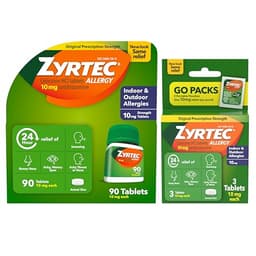
Zyrtec (cetirizine)
Best For
Strongest overall symptom relief in head-to-head and pooled trial data, fastest onset
Works In
About 1 hour
Price
$43.89
$0.47 / count
Pros
- ✓Fastest onset of the three in direct comparison trials
- ✓Consistently among the top performers for total symptom relief in comparative and network meta-analyses
- ✓Once-daily dosing with a well-established long-term safety record
Cons
- ✗Meaningfully more likely to cause drowsiness than Claritin or Allegra
- ✗Not the best choice if you need to stay sharp for driving or focused work
- ✗The efficacy edge over loratadine, while real, is modest rather than dramatic
We earn 1-4%/sale if you sign up · See all commissions
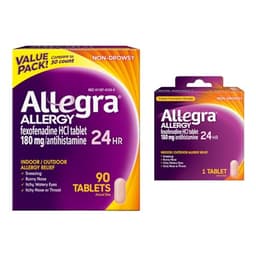
Allegra (fexofenadine)
Best For
Equivalent relief to Zyrtec with meaningfully less drowsiness
Works In
1-3 hours
Price
$39.99
$0.44 / count
Pros
- ✓A direct randomized trial found equivalent efficacy to cetirizine with significantly less drowsiness
- ✓Good choice for daytime dosing before driving or focused work
- ✓Twice-daily 60mg or once-daily 180mg formulations offer dosing flexibility
Cons
- ✗Slightly slower onset than cetirizine in most head-to-head comparisons
- ✗Some formulations interact with fruit juices — take with water for full absorption
- ✗Twice-daily dosing needed for the 60mg formulation to match 24-hour coverage
We earn 1-4%/sale if you sign up · See all commissions
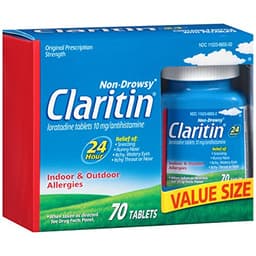
Claritin (loratadine)
Best For
Lowest sedation risk of the three, gentlest starting option
Works In
1-3 hours
Price
$19.91
$0.28 / count
Pros
- ✓Lowest sedation-reporting rate of the three in real-world surveillance data
- ✓Long track record and wide availability, including many low-cost generic versions
- ✓Reasonable first choice if you've never tried an antihistamine and want to start with the gentlest option
Cons
- ✗Head-to-head trials generally find weaker symptom relief than cetirizine
- ✗Slower onset than cetirizine in controlled comparisons
- ✗May underperform for people with more severe or persistent symptoms
We earn 1-4%/sale if you sign up · See all commissions
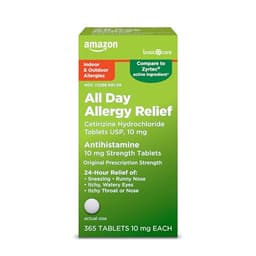
Amazon Basic Care Cetirizine (generic)
Best For
Same evidence as Zyrtec at a fraction of the price
Works In
About 1 hour
Price
$13.57
$0.04 / count
Pros
- ✓Identical active ingredient, dose, and mechanism as Zyrtec — FDA requires demonstrated bioequivalence before approval
- ✓Independent pharmacokinetic studies of generic cetirizine tablets confirm comparable absorption to the branded product
- ✓Often 60-80% cheaper per dose than the brand-name version
Cons
- ✗Same sedation profile as Zyrtec — buying generic doesn't avoid the drowsiness tradeoff
- ✗Inactive ingredients (fillers, dyes) can differ slightly between manufacturers
- ✗Packaging and pill shape can change between lots
We earn 1-4%/sale if you sign up · See all commissions
Amazon prices retrieved from the Amazon Product Advertising API on . Prices and availability are accurate as of that time and may change.
Cost Per Dose: Brand vs Generic
The biggest cost lever in this category isn't which of the three drugs you pick — it's whether you buy the brand or the generic. Brand-name Zyrtec, Claritin, and Allegra all run in a similar range, roughly $0.50-0.65 per dose depending on pack size and retailer. Generic cetirizine, loratadine, and fexofenadine typically run $0.10-0.25 per dose — often 60-80% less for what the FDA requires to be a bioequivalent product.
That "bioequivalent" claim isn't marketing language; it's a regulatory requirement. An independent pharmacokinetic bioequivalence study of generic cetirizine tablets confirmed absorption profiles comparable to the branded reference product using controlled urine excretion data PMID: 36691524 — the active ingredient, dose, and mechanism are the same, and the differences are typically limited to inactive fillers, dyes, and price. The same logic applies to store-brand loratadine and fexofenadine. For the full breakdown of what generic labeling actually guarantees (and where it doesn't), see our generic vs. brand allergy medicine comparison.
Which One Should You Take?
Match the choice to your actual day rather than the marketing on the box. If you need maximum symptom control and can tolerate some drowsiness — or you take it in the evening — cetirizine (Zyrtec or its generic) has the strongest head-to-head efficacy data. If you need to stay alert for driving, work, or caring for kids, fexofenadine (Allegra) gives you equivalent relief to cetirizine with meaningfully less sedation. If you want the gentlest possible starting point, or you've had a bad reaction to sedation from cetirizine in the past, loratadine (Claritin) is the lowest-sedation option, with a smaller efficacy tradeoff than you might expect. And in every case, the generic version of whichever one you land on is the same drug at a fraction of the price — there's rarely a reason to pay brand prices once you know which active ingredient works for you.
None of these differences are so large that picking "wrong" leaves you without relief — all three reliably beat placebo. If a single antihistamine at the standard dose isn't controlling your symptoms after a week or two of consistent use, that's more often a sign to add an intranasal steroid or talk to an allergist than to switch antihistamines again or double up. Our seasonal allergies survival guide covers the full range of options, including when it's time to move beyond antihistamines, and our full allergy medicine rankings compare this trio against nasal sprays, eye drops, and why Benadryl doesn't belong in a daily routine.
Frequently Asked Questions
Zyrtec vs Claritin: which is stronger? Cetirizine (Zyrtec) has the edge in head-to-head trials — a controlled outdoor study found faster onset and a larger reduction in symptom scores than loratadine (Claritin). A 2026 network meta-analysis reached a similar conclusion, though the gap is real but modest.
Can you take Zyrtec and Claritin together? It's not recommended. Both are antihistamines in the same drug class, so combining them doesn't reliably add extra relief and mainly stacks sedation risk. If one isn't working, switching or adding a nasal steroid is the better move than doubling up.
Which allergy medicine makes you least drowsy? Fexofenadine (Allegra) and loratadine (Claritin) are the least sedating. A randomized trial found fexofenadine matched cetirizine's efficacy with significantly less drowsiness, and surveillance data found cetirizine's sedation-reporting rate was roughly 3.5 times higher than loratadine's.
How much do Zyrtec, Claritin, and Allegra cost per dose? Brand versions run roughly $0.50-0.65 per dose. Generics are FDA-required to be bioequivalent and typically cost $0.10-0.25 per dose — 60-80% less for the same active ingredient.
Is Allegra or Claritin better for daytime alertness? Both are reasonable for daytime use since neither is strongly sedating. The practical difference between the two is small.
Do I need to try more than one before I know which works for me? Often, yes. Individual response varies more than average trial data suggests, so it's reasonable to trial one option for one to two weeks and switch if it isn't controlling symptoms or the drowsiness isn't tolerable.
References
- Meltzer EO, Weiler JM, Widlitz MD. Comparative outdoor study of the efficacy, onset and duration of action, and safety of cetirizine, loratadine, and placebo for seasonal allergic rhinitis. Journal of Allergy and Clinical Immunology. 1996;97(2):617-626. PMID: 8621847.
- Vieira RJ, Gil-Mata S, Ferreira A, et al; ARIA 2024-2025 Guideline Panel. Efficacy and Safety of Oral Antihistamines for Allergic Rhinitis: Network Meta-Analysis. Journal of Allergy and Clinical Immunology: In Practice. 2026;14(5):1175-1183. PMID: 41707943.
- Hong D, Weng J, Ye M, Liu Y. Efficacy of different oral H1 antihistamine treatments on allergic rhinitis: a systematic review and network meta-analysis of randomized controlled trials. Brazilian Journal of Otorhinolaryngology. 2023;89(4):101272. PMID: 37271114.
- Hampel F, Ratner P, Mansfield L, Meeves S, Liao Y, Georges G. Fexofenadine hydrochloride, 180 mg, exhibits equivalent efficacy to cetirizine, 10 mg, with less drowsiness in patients with moderate-to-severe seasonal allergic rhinitis. Annals of Allergy, Asthma & Immunology. 2003;91(4):354-361. PMID: 14582814.
- Mann RD, Pearce GL, Dunn N, Shakir S. Sedation with "non-sedating" antihistamines: four prescription-event monitoring studies in general practice. BMJ. 2000;320(7243):1184-1186. PMID: 10784544.
- Onuh G, Adu JK, Bekoe SO, Johnson R, Adosraku RK, Asare-Nkansah S. Bioequivalence studies of cetirizine tablets using the urine excretion data of healthy Ghanaian male volunteers. Heliyon. 2023;9(1):e12665. PMID: 36691524.