Seasonal allergies — hay fever, allergic rhinitis, whatever you want to call the sneezing-itching-congestion combo that shows up whenever certain plants are pollinating — affect roughly a quarter of U.S. adults, and for a lot of people the last several years have genuinely felt worse than the ones before. This guide covers what's actually driving that, the medication approach with the strongest evidence behind it, and the timing and exposure habits worth knowing, in plain terms.
This article is for general education and isn't a substitute for a diagnosis or treatment plan from your own physician or allergist.
Quick Answer
For most seasonal allergies, a second-generation antihistamine like cetirizine (Zyrtec) controls sneezing and itching; if nasal congestion is your main complaint, a daily intranasal corticosteroid like Flonase works better than any oral antihistamine. Combine both — plus limiting outdoor exposure during midday pollen peaks — for the best relief.
Why Are My Allergies So Bad This Year?
If it feels like allergy season starts earlier, lasts longer, and hits harder than it used to, that's a documented trend, not a coincidence or a false memory. An analysis of pollen monitoring station data across North America found that the pollen season now starts around 20 days earlier and runs about 8 days longer than it did in 1990, and that total airborne pollen concentrations rose by roughly 21% between 1990 and 2018 — increases the researchers linked most strongly to rising temperatures and, to a lesser degree, higher atmospheric CO2, which some studies suggest boosts individual plants' pollen output PMID: 33558232. Texas and the Midwest saw some of the largest, most consistent increases, but the broader pattern held across most of the continent.
That doesn't mean every bad allergy year is climate-driven — local weather (a wet spring followed by a warm snap) can spike a single season's counts on its own — but the baseline itself has shifted. If a routine that worked fine five years ago suddenly feels inadequate, you're likely dealing with meaningfully more allergen exposure, not allergies that are mysteriously getting worse for no reason.
How to Stop Seasonal Allergies Immediately (Or as Close as You Can Get)
There's no single pill that erases symptoms in minutes, but a few things move fastest:
- A second-generation oral antihistamine (cetirizine, loratadine, fexofenadine) starts working within about an hour and blunts sneezing, itching, and watery eyes. This is the closest thing to fast, general-purpose relief in the OTC aisle.
- A saline nasal rinse or spray physically flushes pollen and mucus out of the nasal passages. It doesn't treat the underlying allergic reaction, but the relief is immediate and there's essentially no downside to using one after high-exposure time outdoors.
- Rinsing off and changing clothes after being outside removes pollen from skin, hair, and fabric before it keeps triggering symptoms indoors — a genuinely underrated step, especially before bed, since pollen on a pillow can disrupt an entire night.
- Getting indoors with windows closed and AC running during your local peak pollen hours (more on timing below) reduces new exposure while whatever you've already taken has a chance to work.
What doesn't work as "immediately" as people hope: intranasal corticosteroids. They're the single most effective OTC option for nasal symptoms specifically (see below), but they need days of consistent daily use to reach full effect — they're a maintenance tool, not a rescue one. If you need same-day relief and haven't been using one daily already, lean on the antihistamine-plus-rinse combination above and start the nasal spray today for tomorrow's benefit.
The Medication Ladder: What Actually Works, In Order
Allergy medicine aisles are crowded enough that "just grab something" is a genuinely bad strategy — different drug classes target different symptoms, and the evidence for each is more specific than the marketing suggests. Here's the order that reflects the actual trial data, not shelf placement.
Step 1: A second-generation antihistamine
Cetirizine, loratadine, and fexofenadine block histamine receptors with far less sedation than older drugs like diphenhydramine (Benadryl), and they're a reasonable first-line option for sneezing, itching, and runny nose. Cetirizine specifically has one of the deeper trial records in the class: a randomized, placebo-controlled trial in adults during ragweed season found cetirizine produced significantly greater symptom improvement than both placebo and terfenadine within the first week of treatment PMID: 8630719, and a separate randomized trial in children ages 6 to 11 found a 10 mg once-daily dose significantly reduced total symptom severity compared with placebo over a 4-week course PMID: 9114992. A more recent pair of randomized trials looking specifically at dosing schedule found cetirizine improved symptoms at both 12 and 24 hours post-dose regardless of whether it was taken in the morning or at bedtime — useful to know if your worst symptoms hit overnight or first thing in the morning, since allergic rhinitis symptoms tend to follow their own circadian pattern PMID: 30027003.
Antihistamines are generally weaker on nasal congestion specifically than on sneezing, itching, and eye symptoms — which is exactly where step 2 comes in.
Step 2: An intranasal corticosteroid
If congestion, stuffiness, or post-nasal drip are your dominant complaints, an intranasal corticosteroid spray (fluticasone/Flonase, triamcinolone/Nasacort, or others) is the better-evidenced starting point, not a fallback. A systematic review and meta-analysis of five randomized controlled trials totaling 990 patients found intranasal corticosteroids significantly outperformed oral antihistamines on total nasal symptom score, nasal obstruction, rhinorrhea, itching, sneezing, and quality of life — with no meaningful difference between the two classes for ocular symptoms specifically PMID: 28234147. That last part matters for how you build a regimen: a nasal steroid alone may leave itchy, watery eyes under-treated even while it's doing an excellent job on the nose.
The individual trial data backs this up. A dose-ranging, placebo-controlled trial of fluticasone propionate nasal spray in 423 adults with moderate-to-severe seasonal allergic rhinitis found all active doses significantly reduced symptoms compared with placebo, with improvement evident within 3 days PMID: 2200821, and a separate randomized trial found intranasal fluticasone propionate outperformed oral terfenadine (an older second-generation antihistamine) for seasonal allergic rhinitis symptoms PMID: 7993153. The tradeoff is time to effect — nasal steroids need consistent daily use, not as-needed dosing, to reach that level of benefit.
Step 3: Combination therapy, for symptoms that don't fully resolve
When a nasal steroid alone isn't enough, a combined intranasal antihistamine-and-corticosteroid spray (marketed as MP-AzeFlu, e.g., Dymista) is the next evidence-backed step before escalating further. A systematic review and meta-analysis of randomized trials found this combination reduced total nasal symptom scores significantly more than placebo, azelastine alone, or fluticasone alone, and concluded it's reasonable as second-line therapy for allergic rhinitis not controlled by monotherapy PMID: 30961435. It's a prescription option in the U.S. rather than an OTC one, so it's the natural next conversation with a doctor or allergist if you've genuinely given steps 1 and 2 a fair trial — a few consistent weeks, not a couple of bad days — without adequate relief.
For a head-to-head breakdown of specific brands within each step, see our comparisons of Zyrtec vs. Claritin vs. Allegra and Flonase vs. Nasacort vs. Astepro.
Our Core Toolkit
These aren't ranked as a "best of" competition — they're four tools that cover different parts of the symptom picture, and most people dealing with real seasonal allergies end up using more than one at once.
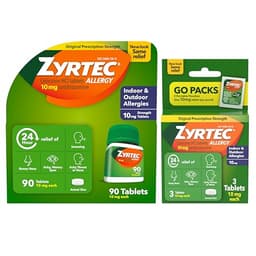
Zyrtec (cetirizine 10mg)
Best For
Daily control of sneezing, itching, and watery eyes
Works In
About 1 hour for first relief; steady control within a few days of daily dosing
Price
$43.89
$0.47 / count
Pros
- ✓One of the more extensively trialed second-generation antihistamines, in both adults and children
- ✓Effective at both 12 and 24 hours post-dose regardless of morning or bedtime dosing
- ✓Once-daily, non-drowsy for most users compared with first-generation antihistamines
Cons
- ✗Weaker on nasal congestion specifically than an intranasal corticosteroid
- ✗A minority of users report more drowsiness with cetirizine than with loratadine or fexofenadine
- ✗Doesn't touch eye redness or congestion the way a dedicated eye drop or nasal spray does
We earn 1-4%/sale if you sign up · See all commissions
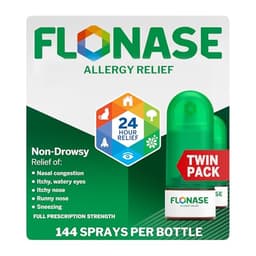
Flonase (fluticasone propionate nasal spray)
Best For
Nasal congestion, stuffiness, and post-nasal drip
Works In
Improvement within about 3 days; full effect with 1-2 weeks of consistent daily use
Price
$56.64
$0.20 / count
Pros
- ✓Outperforms oral antihistamines on nasal symptom scores in meta-analysis-level evidence
- ✓Once- or twice-daily dosing with low systemic steroid absorption
- ✓The single best-evidenced OTC option for congestion specifically
Cons
- ✗Needs daily use to build effect — not a same-day rescue option
- ✗Can cause nasal dryness or occasional nosebleeds if the spray technique aims at the septum
- ✗Doesn't meaningfully address eye itching on its own
We earn 1-4%/sale if you sign up · See all commissions
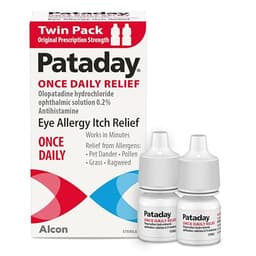
Pataday (olopatadine ophthalmic solution)
Best For
Itchy, watery, red allergy eyes that oral or nasal meds leave untreated
Works In
Minutes for itching relief, lasting up to 24 hours
Price
$24.75
$12.38 / count
Pros
- ✓Randomized, placebo-controlled trial data showing significant reductions in ocular itching and redness during real pollen exposure
- ✓Once-daily dosing with both antihistamine and mast-cell-stabilizing action
- ✓Fills a real gap — meta-analysis shows nasal steroids don't reliably help eye symptoms
Cons
- ✗Only addresses eye symptoms, not nasal congestion or sneezing
- ✗Mild stinging on instillation for some users
- ✗An add-on to, not a replacement for, an antihistamine or nasal spray
We earn 1-4%/sale if you sign up · See all commissions
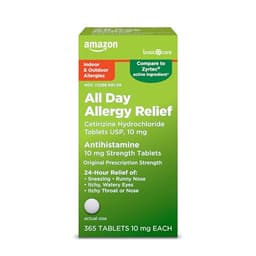
Generic Cetirizine (Amazon Basic Care or equivalent)
Best For
Same active ingredient as Zyrtec at a fraction of the cost
Works In
Same onset and duration as brand-name cetirizine
Price
$13.57
$0.04 / count
Pros
- ✓FDA bioequivalence standards require the same active ingredient, dose, and absorption profile as Zyrtec
- ✓Meaningfully cheaper per dose for daily, season-long use
- ✓Same 10mg once-daily dosing and the same evidence base as the brand-name drug
Cons
- ✗Inactive fillers and tablet coating can differ between manufacturers
- ✗Some people report a subjective preference for the brand-name product without a clear pharmacologic reason
- ✗Packaging and pill size vary lot to lot depending on the manufacturer
We earn 1-4%/sale if you sign up · See all commissions
Amazon prices retrieved from the Amazon Product Advertising API on . Prices and availability are accurate as of that time and may change.
For itchy, watery, red allergy eyes that an oral antihistamine or nasal spray doesn't fully clear up, olopatadine eye drops (Pataday) have randomized, placebo-controlled trial data showing a significant reduction in ocular itching and redness during real-world pollen exposure PMID: 15476905.
For the full lineup across brands and price points, see our ranking of the best allergy medicines, our nasal spray comparison, and our eye drop roundup. If cost is the deciding factor, our generic vs. brand breakdown digs deeper into where store brands hold up and where they don't.
Best Time of Day to Go Outside With Pollen Allergies
Pollen release follows a daily rhythm, and knowing it can meaningfully cut your exposure without changing anything else about your routine. A pollen-monitoring study using volumetric samplers found that airborne pollen concentrations across several common allergenic plant types began rising after roughly 4 to 6 a.m., peaked between noon and 4 p.m., and were lowest overnight, with about half of each day's total pollen release concentrated between 10 a.m. and 4 p.m. PMID: 22220402.
That points to two relatively lower-exposure windows: early morning, right around or shortly after sunrise, before the daily rise gets going, and evening, after the midday peak has passed and pollen has had time to settle. Late morning through mid-afternoon — exactly the stretch most outdoor errands, workouts, and yard work tend to happen — is generally the worst window if pollen is your trigger.
Two caveats: this pattern varies by plant type and region, so a local pollen forecast app is more reliable than a general rule, and weather overrides timing entirely — a windy day keeps pollen suspended longer, while the period right after rain is often the single best window to be outside, regardless of clock time.
When Does Allergy Season End?
There's no single answer, because "allergy season" is really three overlapping seasons tied to different plants, and they end at different times depending on where you live:
- Tree pollen (oak, birch, cedar, and others) typically runs late winter through spring, tapering off as trees finish their reproductive cycle by late spring in most of the U.S.
- Grass pollen picks up as tree pollen fades and generally runs through late spring and summer.
- Ragweed and other weed pollens are the last major outdoor allergen of the year in most regions, typically running from August through the first hard frost — which is also, practically speaking, the real end of "allergy season" for most people, since frost kills the plants producing it.
That frost date varies enormously by latitude — late September in northern states, not until November or later in the warmer South. If you're mainly ragweed-sensitive, your local first-frost forecast is a more useful signal than any generic calendar date. And since the broader pollen season is starting earlier and running longer than it used to PMID: 33558232, "allergy season" as a fixed block of months is a less reliable mental model than it was a couple of decades ago.
Reducing Exposure: The Habits That Actually Help
Medication treats the reaction; these reduce how much allergen you're reacting to in the first place.
Keep windows closed and run the AC during your local peak pollen season, using the recirculate setting in a car rather than pulling in outside air. This is one of the more consistently recommended, low-effort changes.
Shower and change clothes after significant outdoor time, especially before bed — pollen on hair, skin, and fabric keeps triggering symptoms indoors otherwise, and a pollen-covered pillow can disrupt sleep and worsen next-morning symptoms.
Dry laundry indoors during high-pollen weeks instead of on an outdoor line, where fabric collects airborne pollen directly.
Consider a HEPA air purifier for bedrooms, with an honest caveat: filtration measurably reduces indoor particulate levels, but the clinical evidence that air purifiers alone meaningfully reduce allergic symptoms is more mixed than the marketing implies. If you go this route, prioritize a unit sized correctly for the room (check its CADR rating against square footage) over broad "removes allergens" claims, and treat it as a supplement to medication, not a replacement.
A saline nasal rinse after high-exposure outdoor time mechanically clears allergens and mucus from the nasal passages — low-risk, genuinely useful, and a reasonable daily habit during peak season regardless of what medication you're also using.
Who Should See an Allergist Instead of Self-Treating
Most seasonal allergy cases are manageable with the medication ladder above and reasonable exposure habits. It's worth escalating to an allergist if: symptoms don't meaningfully improve after a genuine multi-week trial of an antihistamine and a nasal steroid used correctly; you're relying on rescue antihistamines most days of the season just to function; symptoms come with wheezing, shortness of breath, or a known asthma diagnosis, since poorly controlled allergic rhinitis can worsen asthma control; or you want allergy testing or immunotherapy (shots or sublingual drops) to address the underlying sensitivity rather than managing symptoms every year. An allergist can also sort out whether "worse seasonal allergies" is really a second trigger — dust mites, pet dander, or mold — layered on top of pollen sensitivity.
Frequently Asked Questions
Why are my allergies so bad this year? Pollen seasons have gotten longer and more intense across North America — the season is now roughly 20 days earlier and 8 days longer than in 1990, with about 21% more total pollen in the air, tied mainly to rising temperatures. It's a real, documented shift, not just perception.
How can I stop seasonal allergies immediately? There's no instant cure, but a second-generation antihistamine (about an hour to kick in), a saline nasal rinse, and getting indoors during peak pollen hours together produce the fastest realistic relief. A daily intranasal corticosteroid controls congestion better long-term but takes days to build full effect.
What's the best time of day to go outside with pollen allergies? Pollen counts are typically lowest overnight, rise through early morning, and peak between roughly midday and mid-afternoon before easing in the evening. Early morning and evening tend to be more tolerable windows, though wind and rain shift this daily.
When does allergy season end? It depends on your allergen and region — tree pollen fades by late spring, grass pollen runs through summer, and ragweed, the last major outdoor allergen for most people, doesn't end until the first hard frost, anywhere from September to November depending on latitude.
Should I take an antihistamine or a nasal spray first? If sneezing and itching dominate, start with a second-generation antihistamine. If congestion or post-nasal drip dominate, meta-analysis evidence favors starting with an intranasal corticosteroid, since it outperforms oral antihistamines on nearly every nasal symptom measure.
Is generic cetirizine as effective as Zyrtec? Yes — FDA bioequivalence requirements mean generic cetirizine has the same active ingredient, dose, and absorption profile as brand-name Zyrtec. The differences are limited to inactive fillers and tablet coating.
References
- Anderegg WRL, Abatzoglou JT, Anderegg LDL, Bielory L, Kinney PL, Ziska L. Anthropogenic climate change is worsening North American pollen seasons. Proceedings of the National Academy of Sciences. 2021;118(7):e2013284118. PMID: 33558232.
- Lockey RF, Widlitz MD, Mitchell DQ, et al. Comparative study of cetirizine and terfenadine versus placebo in the symptomatic management of seasonal allergic rhinitis. Annals of Allergy, Asthma & Immunology. 1996;76(5):448-454. PMID: 8630719.
- Pearlman DS, Lumry WR, Winder JA, Noonan MJ. Once-daily cetirizine effective in the treatment of seasonal allergic rhinitis in children aged 6 to 11 years: a randomized, double-blind, placebo-controlled study. Clinical Pediatrics. 1997;36(4):209-215. PMID: 9114992.
- Urdaneta ER, Patel MK, Franklin KB, Tian X, Wu MM. Assessment of Different Cetirizine Dosing Strategies on Seasonal Allergic Rhinitis Symptoms: Findings of Two Randomized Trials. Allergy & Rhinology. 2018;9:2152656718783630. PMID: 30027003.
- Juel-Berg N, Darling P, Bolvig J, et al. Intranasal corticosteroids compared with oral antihistamines in allergic rhinitis: A systematic review and meta-analysis. American Journal of Rhinology & Allergy. 2017;31(1):19-28. PMID: 28234147.
- Meltzer EO, Orgel HA, Bronsky EA, et al. A dose-ranging study of fluticasone propionate aqueous nasal spray for seasonal allergic rhinitis assessed by symptoms, rhinomanometry, and nasal cytology. Journal of Allergy and Clinical Immunology. 1990;86(2):221-230. PMID: 2200821.
- van Bavel J, Findlay SR, Hampel FC Jr, Martin BG, Ratner P, Field E. Intranasal fluticasone propionate is more effective than terfenadine tablets for seasonal allergic rhinitis. Archives of Internal Medicine. 1994;154(23):2699-2704. PMID: 7993153.
- Debbaneh PM, Bareiss AK, Wise SK, McCoul ED. Intranasal Azelastine and Fluticasone as Combination Therapy for Allergic Rhinitis: Systematic Review and Meta-analysis. Otolaryngology-Head and Neck Surgery. 2019;161(3):412-418. PMID: 30961435.
- Toth I, Peternel R, Srnec L, Vojniković B. Diurnal variation in airborne pollen concentrations of the selected taxa in Zagreb, Croatia. Collegium Antropologicum. 2011;35(Suppl 2):43-50. PMID: 22220402.
- Abelson MB, Gomes PJ, Vogelson CT, et al. Clinical efficacy of olopatadine hydrochloride ophthalmic solution 0.2% compared with placebo in patients with allergic conjunctivitis or rhinoconjunctivitis: a randomized, double-masked environmental study. Clinical Therapeutics. 2004;26(8):1237-1248. PMID: 15476905.