rx-allergyrelief.com

Navage Nose Cleaner Review

Updated 2026-09-25 · 3 min read · Sources linked in the text

Advertising disclosure: We earn a commission when you buy through links on this page, at no extra cost to you. It never changes our rankings — we disclose the exact commission next to every recommendation. See our full disclosure.

Our verdict

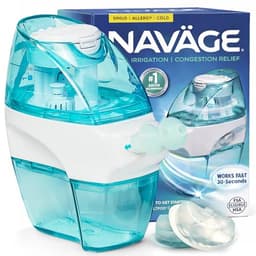
Navage Nose Cleaner product photo

Navage Nose Cleaner

Grade CLimited evidence

Navage is a powered nasal irrigator that pulls saline through your nose with suction, using single-use SaltPods. It's less messy than a squeeze bottle, which may help you stick with it. But the evidence for saline in allergies is limited, no trials compare Navage with a squeeze bottle, and each rinse costs several times more. You're paying for convenience, not better results.

$99.88 ($99.88 / count)

Amazon price as of Sep 25

Check price on Amazon

We earn 1-4%/sale if you sign up · See all commissions

Best for

  • People who find squeeze bottles messy or unpleasant
  • Daily rinsers who value convenience

Skip it if

  • You're on a budget — NeilMed does the same job
  • You don't want to buy proprietary pods
Navage Nose Cleaner key facts
Active ingredientSaline SaltPods (drug-free)
FormPowered suction nasal irrigation
Works inImmediate (mechanical rinse)
How to useOnce or twice daily
AgesSee the label
Exact item we link toNavage Starter Bundle: powered nasal irrigator + 30 SaltPods
Price$99.88 ($99.88 / count) (amazon price as of sep 25)

How we got 3.1

3.0
Evidence grade C (limited evidence). A Cochrane review found saline irrigation may reduce allergic rhinitis severity, but the evidence is low or very low quality (PMID 29932206). No trials compare powered suction rinsing with squeeze bottles.
+0.1
Practical adjustment. Less messy and easier to stick with than a squeeze bottle, but several times the cost per rinse and locked into proprietary pods.

Scores are calculated, not hand-picked: evidence first, with a small adjustment for side effects, convenience, and value. How we rate

What it is

Navage is a powered nasal irrigator. You fill the upper tank with safe water and drop in a single-use SaltPod, which holds pre-measured salt. You put a nozzle in each nostril and press a button. The device pulls saline in through one nostril and out the other with suction. Used saline collects in a separate lower tank.

The item we link to is the Navage Starter Bundle: the device plus 30 SaltPods.

Typical use is once or twice a day. Follow the label's age limits and directions for children.

How well it works

Navage does the same job as any nasal rinse: it washes out pollen, dust and mucus. It doesn't treat the allergic reaction.

The evidence for saline rinsing is limited. A Cochrane review pooled 14 small randomized trials in adults and children with allergic rhinitis. Saline irrigation may reduce symptom severity compared with no saline, for up to three months, with no reported side effects. But the overall quality of evidence was low or very low PMID: 29932206. The review also couldn't tell whether the volume or delivery method mattered.

No trials compare Navage with squeeze bottles. Any claim that powered suction works better is marketing, not data.

So Navage is a reasonable, low-risk add-on. It isn't a replacement for a steroid spray like Flonase, which has much stronger evidence.

Water safety and upkeep

Use only distilled, sterile, or boiled-and-cooled water. Never use water straight from the tap.

Tap water that's safe to drink can carry Naegleria fowleri, an amoeba that can travel from the nose to the brain. The infection is almost always fatal. In 2011, two people in Louisiana died after regular sinus rinsing with tap water PMID: 22919000. In 2012, a man in the U.S. Virgin Islands died after nasal rinsing with tap water during a religious practice PMID: 24226628. This rule applies to every rinse device, powered or not.

Upkeep tips:

  • Empty and clean both tanks and the nozzles as the manual directs.
  • Let every part air-dry fully. Damp tanks can grow mold and bacteria.
  • Don't share nozzles.
  • Skip rinsing and ask a clinician if you have an ear infection, blocked ears, or a fully blocked nose.

Both flush saline through the nose. The difference is how, and what it costs.

  • Mess: Navage's suction keeps most of the saline in the device. A NeilMed squeeze bottle drains into the sink and takes more technique.
  • Cost: Navage runs about 70 to 100 dollars upfront and 50 to 60 cents per rinse. NeilMed is about 10 to 15 cents per rinse after a cheap kit.
  • Flexibility: Navage needs its own SaltPods. NeilMed works with any properly mixed saline packet.
  • Parts: Navage has a motor, two tanks and nozzles to clean. A bottle has a bottle and a cap.

Who should buy it

Buy Navage if you rinse daily, find squeeze bottles messy or unpleasant, and value convenience enough to pay more per rinse.

Choose NeilMed instead if you're on a budget or don't want to be tied to proprietary pods. It does the same job.

Choose Simply Saline for a no-prep mist on the go. For a deeper look, see Navage vs NeilMed.

Pros

  • Powered suction makes rinsing less messy than a squeeze bottle
  • Pre-measured SaltPods mean no mixing
  • Drug-free, with no drug side effects

Cons

  • No trials show it works better than a cheap squeeze bottle
  • About 50 to 60 cents per rinse, locked into proprietary pods
  • Limited evidence: saline trials are small and low quality
  • More parts to clean and dry than a bottle

Navage Nose Cleaner

Navage Starter Bundle: powered nasal irrigator + 30 SaltPods

Check price on Amazon

We earn 1-4%/sale if you sign up · See all commissions

How it compares

ProductScoreWorks inBest for
Navage Nose Cleaner (this review)3.1 · CImmediate (mechanical rinse)People who find squeeze bottles messy or unpleasant
NeilMed Sinus Rinse3.3 · CImmediate (mechanical rinse)Flushing pollen and mucus after outdoor exposure
Simply Saline Extra Strength3.0 · CImmediate (mechanical rinse)Dry or crusty nasal passages
Flonase Allergy Relief4.7 · ASome relief within a day; full effect after several days of daily useNasal congestion

Frequently asked questions

Is Navage better than NeilMed?

Not in any way that's been measured. No trials compare powered suction irrigation with squeeze bottles. Navage is less messy; NeilMed is far cheaper per rinse. Pick the one you'll actually use.

Can I use tap water in a Navage?

No. Use only distilled water, sterile water, or tap water that you've boiled and let cool. Tap water can carry a rare amoeba, Naegleria fowleri, that can reach the brain through the nose. Deaths have been linked to nasal rinsing with tap water.

Can I use my own salt instead of SaltPods?

The device is designed around SaltPods, which is why the per-rinse cost is higher. If you want to use cheap packets or homemade saline, a squeeze bottle like NeilMed is the better fit.

Is Navage worth it?

It can be, if mess is what stops you from rinsing. It costs about 70 to 100 dollars upfront and about 50 to 60 cents per rinse. If you're happy with a squeeze bottle, it won't give you better relief.

See it ranked against the competition

Navage vs NeilMed →