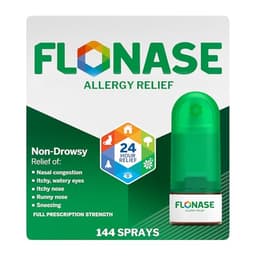
What Flonase is
Flonase Allergy Relief is fluticasone propionate, an intranasal corticosteroid (steroid spray). Each spray delivers 50 mcg. The item we link to is the 144-spray bottle.
A steroid spray works differently from an allergy pill. It doesn't just block histamine. It calms the allergic inflammation in the lining of your nose. That's why it helps congestion, which antihistamine pills do little for.
The dose for adults and children 12 and up is 2 sprays per nostril once a day, then 1 spray per nostril once symptoms are controlled. Children 4 to 11 use 1 spray per nostril once a day, with an adult helping.
How well it works
Steroid sprays are the most effective single maintenance treatment for allergic rhinitis. A systematic review of 16 randomized trials found they relieved nasal blockage, runny nose, sneezing and itch better than oral antihistamines PMID: 9848901. A later meta-analysis reached the same conclusion PMID: 28234147. Fluticasone itself beat an older antihistamine pill (terfenadine) head-to-head in a two-week trial PMID: 7993153.
The catch is timing. Flonase is not a rescue spray. In a dose-ranging trial, improvement over placebo was evident within 3 days of starting daily use PMID: 2200821. Full effect takes several days of steady use. Start it a few days before your pollen season if you can, and keep using it daily until the season ends.
What it treats well: congestion, runny nose, sneezing and nasal itch. Its label also covers itchy, watery eyes.
What it doesn't do: work within the hour. For fast relief, Astepro or an antihistamine pill such as Zyrtec acts sooner.
How to use it, and side effects
Technique matters more than most people think.
- Shake and prime the bottle as the label directs before first use.
- Blow your nose first. Tilt your head slightly forward.
- Aim away from the septum. Point the tip toward the outer wall of the nostril. Using the opposite hand for each side helps.
- Sniff gently. A hard sniff sends the spray down your throat, where it tastes bad and does nothing.
The common side effects are local: dryness, stinging, and nosebleeds. Most of these come from spraying straight at the septum. If nosebleeds keep happening, stop and talk to a clinician.
Some people dislike Flonase's floral scent. That's a comfort issue, not a safety one.
For children, follow the pediatric dose on the label. Steroid sprays may slow growth in some children, so use the lowest dose for the shortest time needed. Talk to your child's doctor if they need it for more than two months a year. Ask a clinician first if you have glaucoma, cataracts, a recent nose injury or surgery, or are pregnant or breastfeeding.
Flonase vs. Nasacort
They work the same. Randomized trials found fluticasone and triamcinolone (Nasacort's ingredient) equally effective in seasonal allergies PMID: 12869911 and in year-round allergies PMID: 30879006.
The differences are practical:
- Scent: Nasacort is unscented and alcohol-free. Flonase has a floral scent.
- Age: Nasacort is labeled from age 2. Flonase is labeled from age 4.
- Eyes: Flonase's label covers itchy, watery eyes. Nasacort's doesn't.
Who should buy it
Buy Flonase if congestion is a daily problem during allergy season and you can use a spray every day for a week before judging it.
Choose Nasacort instead if the scent bothers you or you need a spray for a child aged 2 or 3.
Add Astepro if you need relief within the hour, or if Flonase alone isn't enough after a fair trial. For more options, see our best nasal sprays for allergies.