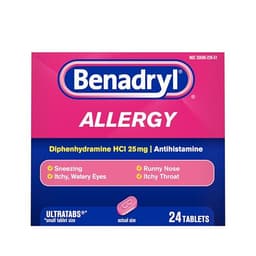
What Benadryl is
Benadryl is the brand name for diphenhydramine, a first-generation antihistamine. The item we link to is Benadryl Ultratabs, diphenhydramine HCl 25 mg tablets.
Diphenhydramine blocks histamine, like the newer allergy pills. The difference is that it passes easily into the brain and also blocks acetylcholine receptors. That causes the drowsiness, dry mouth and other side effects it's known for.
The label covers adults and children 12 and up: one or two tablets (25–50 mg) every 4–6 hours as needed, and no more than six doses in 24 hours. Children 6 to 11 take a lower dose on the label. Don't give it to children under 6.
How well it works
Diphenhydramine does relieve itching, sneezing and a runny nose, and it starts working in 15–30 minutes. The problem isn't whether it works. It's what it costs you in side effects compared with better options.
Newer antihistamines treat the same symptoms. A 2026 network meta-analysis found that the major second-generation antihistamines all improve allergic rhinitis, with similar safety profiles PMID: 41707943. They last 24 hours on a single dose. Diphenhydramine lasts 4–6 hours, so all-day control means taking it several times a day.
Drowsiness, impairment and long-term concerns
This is why diphenhydramine has our lowest evidence grade for allergy use.
Sedation and impairment. A meta-analysis of 18 randomized trials found that diphenhydramine impaired performance compared with placebo and with second-generation antihistamines PMID: 12704356. The results varied between studies and the average effect was modest. Still, drowsiness is common enough that the label warns about it. It can carry into the next morning if you take it at night.
Anticholinergic effects. Blocking acetylcholine can cause dry mouth, blurred vision, constipation and trouble urinating. The label tells you to ask a doctor first if you have glaucoma, trouble urinating from an enlarged prostate, or a breathing problem such as emphysema or chronic bronchitis.
Long-term use. A prospective cohort study of 3,434 adults aged 65 and older followed people for an average of about seven years. Those with the highest cumulative use of strong anticholinergic drugs had a higher risk of dementia than non-users. First-generation antihistamines were one of the most commonly used drug classes in the study PMID: 25621434. This is an association from an observational study, not proof that diphenhydramine causes dementia. It also measured anticholinergic drugs as a group, not Benadryl alone. But combined with the sedation data, it's a good reason not to take it daily for months.
Practical tips:
- Don't drive or do risky work until you know how it affects you.
- Don't combine it with alcohol, sleep aids, or other products containing diphenhydramine, including creams and "PM" pain relievers.
- Older adults should generally avoid it and ask a clinician about alternatives.
- In children, it can sometimes cause excitability instead of sleepiness.
Its one reasonable use, and its limit
Benadryl's legitimate niche is occasional, short-term relief of sudden itching or hives, for example after a bug bite or a mild reaction. Some people keep a few tablets in a first-aid kit for this. A dose at a time when you can rest is a reasonable trade-off.
It is not a substitute for epinephrine. Anaphylaxis can cause throat swelling, trouble breathing, and a dangerous drop in blood pressure. Antihistamines don't reverse those. If someone has these signs after a food, sting or drug exposure, use their epinephrine auto-injector if they have one and call 911. Don't wait to see whether Benadryl helps.
If you get hives that last more than a day or keep coming back, see a clinician rather than relying on repeated Benadryl doses.
Benadryl vs. a daily non-drowsy antihistamine
For everyday allergies, a second-generation pill wins. Generic cetirizine costs about $5–8 a month by our estimate and needs one dose a day. Allegra has the best evidence for low drowsiness: it matched cetirizine's relief with less sedation in a head-to-head trial PMID: 14582814. Both avoid diphenhydramine's strong anticholinergic effects.
Who should buy it
Keep a small supply of Benadryl only for occasional sudden itching or hives, if you're 12 or older and can rest after a dose.
Don't buy it for daily or seasonal allergies, if you need to drive, work or study, if you're an older adult, or if you have glaucoma or an enlarged prostate.
Choose generic cetirizine, Allegra or Zyrtec for daily allergy control. If you have a history of severe allergic reactions, ask your clinician about carrying epinephrine.
See how it compares with the other options in our Best Allergy Medicines roundup.